Understanding How Commercial HVAC Systems Work
Temperature control in commercial buildings is far more than a comfort feature. It’s an essential part of ensuring safety, energy efficiency, and occupant wellbeing. Whether it’s an office tower in Sydney, a retail complex in Brisbane, or a warehouse in Newcastle, the invisible yet powerful work of a commercial HVAC system keeps these environments functional and comfortable every day.
In this article, we’ll unpack how commercial HVAC systems operate. By the end, you’ll understand not just what these systems do but how they impact building health, energy use, and overall business productivity.
What Does “Commercial HVAC” Mean?
The term “HVAC” stands for Heating, Ventilation, and Air Conditioning. In a commercial setting, it refers to systems that:
- Regulate temperature
- Manage humidity
- Bring in fresh air, and
- Remove stale air across large spaces
Compared with a home-unit, these systems handle far greater volumes of air and often serve multiple zones, floors, or even entire building wings.
So when we speak of commercial HVAC, we’re thinking of much more than simply “making a room cool”. It’s about orchestrating comfort, air quality, and efficiency across big footprints.
The Three Core Functions of HVAC Systems
Every HVAC system, residential or commercial, typically carries out three central tasks:
1. Temperature Control
Heating and cooling equipment raise or lower the air temperature as required. On a hot summer’s day, that means cooling large volumes of air and avoiding the outside heat. In cooler months, there will be a better distribution of warmth, often via water-coils, air-handlers, or hydronic loops.
2. Ventilation and Fresh Air
Buildings need a regular supply of outside air. The system introduces fresh air, flushes out stale or contaminated air, and distributes it through ducts. This keeps indoor air safe, especially in offices, schools, or spaces where many people gather.
3. Distribution and Control
Once air is conditioned, it needs to reach the right zones. For that, it initially passes through dampers, which regulate airflow, then through filters and coils, and finally into the duct network.
Sensors and controls also manage when different zones need heating or cooling, so energy isn’t wasted on unused spaces.
Major Components of A Commercial HVAC
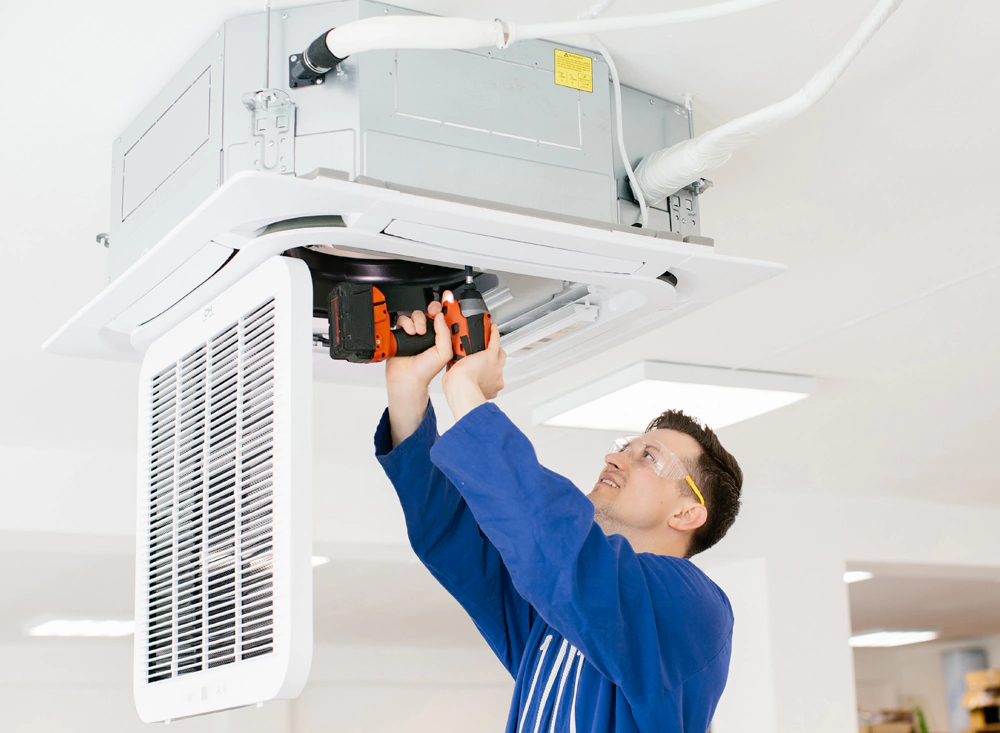
There are several visible components of an HVAC, including:
- ooftop units (RTUs) that house much of the cooling/heating machinery in one cabinet.
- Chillers that cool water
- Coils that pass the cool water, turning them into cool air.
- Air-handling units (AHUs) and large duct networks that deliver conditioned air into different zones.
- Filters, fans, and dampers to manage airflow, clean the air, and adjust distribution.
- Control systems that monitor temperature, humidity, outside-air intake, and system performance.
Types of Commercial HVAC Systems
Different buildings require different system types. Here are some common classifications:
- Centralised systems: One major plant serves the whole building (or large zones). Good for large offices, malls.
- Packaged systems: All equipment in one self-contained unit (often roof-mounted). Useful for smaller commercial spaces.
- Decentralised / zone systems: Multiple smaller units located in different zones, offering more individual control.
Choosing the right type depends on building size, usage patterns, budget and flexibility needed for future changes.
Practical Overview of How HVAC Systems Function
Let’s walk through a typical cooling cycle in a commercial building (you might say “cooling mode” but note the system often supports heating too):
- 1. Outside air is drawn in, filtered, and mixed with return air.
- 2. The air passes over coils or through units that remove heat (via refrigerant or chilled water loops).
- 3. The cooled air is distributed through ducts to different zones; fans push the air into spaces.
- 4. Warm air returns through separate ducts or vents and is either expelled or recirculated after treatment.
- 5. On the roofing or external plant, you might have large condenser/fan units rejecting heat to the atmosphere.
In simpler terms: air is filtered, cooled, pushed into space and then return air processed. This process often repeats thousands of times a day in large commercial setups.
Why Design and Maintenance Of HVAC Matters?
In large buildings, staff and even customers might complain about humidity or “cold corners”. That could link back to poor distribution or too many zones left uncontrolled. Here’s what to watch:
- Dirty filters or coils
- Improper ventilation
- Picking the wrong system type
- Controls that are outdated
Good maintenance keeps the system running, prevents breakdowns, and can save big in energy costs over time. In many commercial buildings, HVAC is one of the largest cost items.
Concluding Words
Understanding how commercial HVAC systems work gives you a powerful lens when planning or managing building environments. It helps you choose the right type with the help of which you’ll not just control temperature and air quality, but also support productivity and energy efficiency. Additionally, you’ll know how to ensure proper maintenance and prolong the life of your system.
Onsite Air: Your Trusted Air Conditioning Services
If you’re in the market for a reliable partner for your commercial HVAC needs, we invite you to consider our expert team. We specialise in full-service design, installation, and maintenance of commercial air-conditioning and refrigeration systems across the Hunter region. From rooftop plant to chillers and ductwork, we bring experience, responsiveness, and clear communication. Contact us to learn more about our services and let us tailor a solution that truly fits your building’s needs.
Share on
Related Posts
Get a FREE Quote