What Happens During AC Maintenance?

Your air conditioner is not really an install-and-forget system. It might keep running for years, but that does not mean it is running as well as it should.
You can clean the filters yourself and keep an eye out for obvious issues, but a proper maintenance visit usually goes a fair bit further. A technician will check how the system is running, inspect the parts that tend to collect dirt or wear over time, and look for anything that could turn into a bigger problem later.
So, what actually happens during AC maintenance?
The Technician Usually Starts by Running the System
Before pulling anything apart, the technician will often switch the air conditioner on and see how it behaves. They may listen for rattles, buzzing or unusual fan noise. Airflow may be checked too. If the room is not cooling properly, or one part of the system is working harder than expected, that can point them in the right direction early.
Not every issue is obvious straight away, though. Sometimes the system seems fine until individual parts are inspected more closely.
Filters Are Checked First
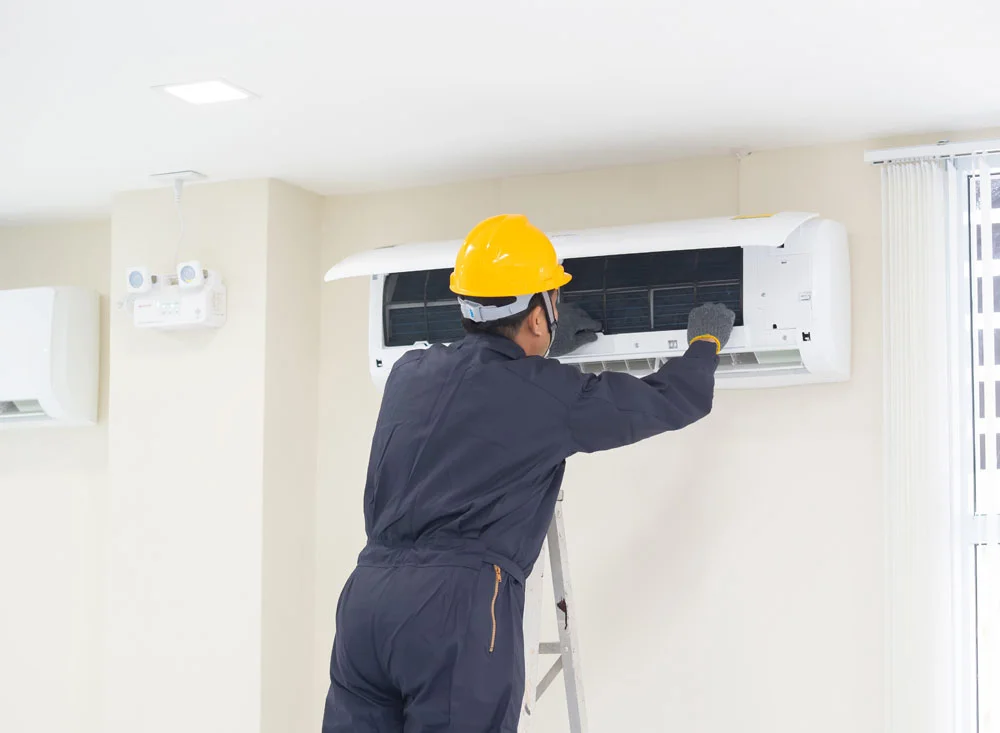
Filters do a lot of the dirty work. Over time they collect dust, lint and other airborne particles. A little build-up is normal. If they are heavily clogged, though, airflow can drop and the system may have to work harder to push air through.
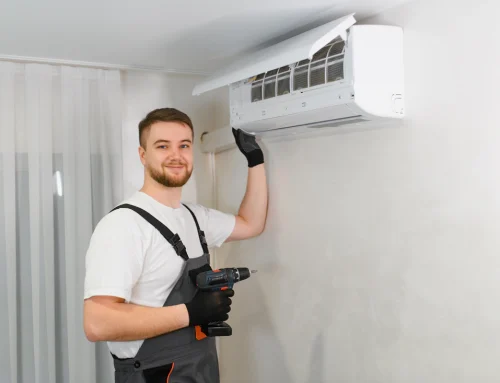
In most cases, reusable filters are cleaned during maintenance. If the filter is damaged or too worn to keep using, replacement may be recommended.
The Indoor Unit Gets a Closer Look
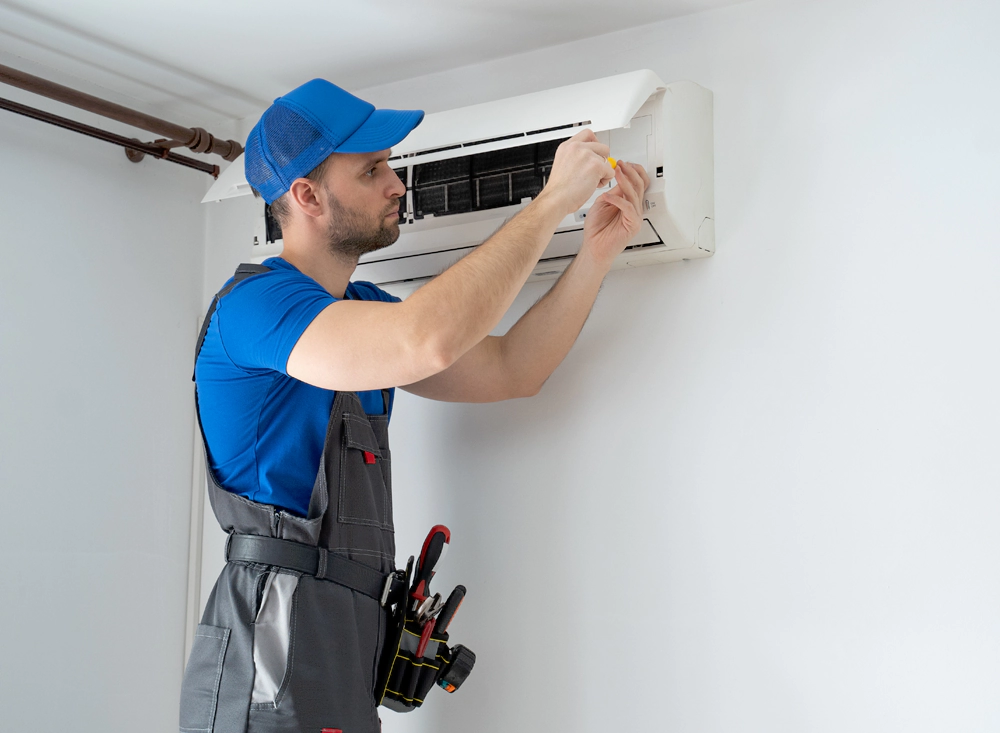
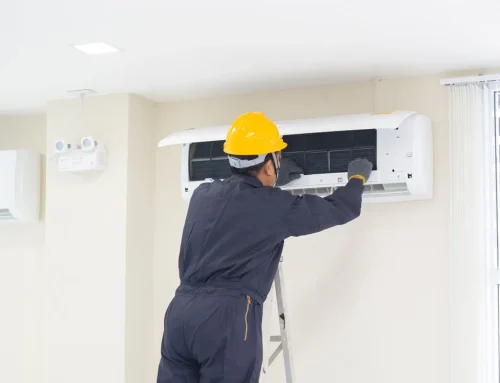
Once the filters are out, there is usually better access to the inside of the unit. The technician may check the evaporator coil, fan and other accessible parts for dirt or moisture build-up. In homes where the air conditioner runs regularly through summer, these areas can gather more dust than people expect. A unit near a kitchen, a busy road or a dusty part of the house may get dirty faster than one in a quieter room. If cleaning is needed, it is generally done as part of the maintenance process.
Drainage Is Checked Too
Air conditioners pull moisture from the air while they are cooling. That water has to drain away properly. The technician may inspect the drain pan and drainage line to make sure nothing is blocked. If the line is starting to clog, it can usually be cleared before it becomes a leak.
You might not think much about the drain until water starts dripping from the indoor unit, but it is a common thing to check during servicing.
The Outdoor Unit Can Tell You a Lot
Outdoor units have a harder life than indoor ones. They sit through dust, leaves, wind, rain and sometimes garden debris. If the unit is close to shrubs, fences or a driveway, it can collect dirt fairly quickly.
During maintenance, the technician will usually check whether airflow around the condenser is clear. The coil may be cleaned if there is visible build-up. This part is fairly practical. If the outdoor unit cannot move air properly, the system has a harder time releasing heat.
Coils Are Inspected for Build-Up
Both the indoor and outdoor coils need to transfer heat properly for the system to work as intended. When dust or grime settles on them, performance can gradually drop. You might notice the air conditioner still works, but takes longer to cool the room or seems to stay on for longer than usual. The technician will normally inspect the coils and clean accessible areas where needed.
Electrical Parts Are Checked
There is also the electrical side of the system. Connections, wiring and other components may be checked for signs of wear, heat damage or looseness. In some cases, a technician may also inspect items such as capacitors or contactors, depending on the system and service scope.
You will not always notice an electrical issue from inside the house. That is part of the reason these checks matter.
Refrigerant Performance May Be Assessed
Not every service involves adding refrigerant, and it should not need topping up as part of normal maintenance.
If refrigerant is low, there may be a leak or another fault somewhere in the system. If the air conditioner is not cooling properly, the technician may check pressures or other operating conditions to see whether the refrigerant side needs further investigation.
This is one area where a service can sometimes turn into a repair diagnosis.
Fans and Motors Are Checked
The fans inside and outside the system keep air moving. The technician may check whether the blades are dirty, whether the fan is running smoothly and whether there is any unusual vibration or noise.
Sometimes a worn motor gives warning signs before it fails completely. Other times, it may just be dirt affecting how smoothly things are running. Either way, this is usually part of the broader system check.
Controls and Thermostat Are Tested
A system can be mechanically fine but still behave badly if the controls are not working properly. The technician may test the thermostat, remote or wall controller and make sure the unit responds to changes in temperature and mode. For ducted systems, zoning controls may also be checked.
If you have noticed a room not responding the way it used to, it is worth mentioning that when the technician arrives.
The System Is Run Again at the End
Once the inspection and cleaning work is done, the air conditioner is usually switched back on. This gives the technician a chance to check airflow, cooling performance and general operation after the service.
Sometimes nothing major is found. The unit gets cleaned, a few minor things are checked and it is good to go. Other times, the service picks up early signs of wear that are worth dealing with before the next hot spell.
Does AC Maintenance Include Repairs?
Usually, routine maintenance is about checking, cleaning and testing. If a part is faulty, there is a refrigerant leak, or something more involved is found, repair work may be separate.
A good technician should explain what they have found before going ahead with extra work. It is also worth asking what is included in the maintenance visit beforehand, because service inclusions can vary between companies.
Why Regular AC Maintenance Matters
Most people book maintenance because they want the air conditioner to keep doing its job without any surprises. That is really the main point.
Regular servicing can help keep airflow steady, reduce dirt build-up and give a technician a chance to catch small issues early. It can also help the system run more efficiently if filters, coils and other parts are kept in reasonable condition.
No maintenance schedule can guarantee that something will never fail, but ignoring the system for years is rarely a better option.
How Often Should You Service Your Air Conditioner?
It depends on the system and how much you use it. For many homes, having the air conditioner checked once a year is a practical approach. A system that runs almost every day, sits in a dusty area or is getting older may need attention more often. Your manufacturer may also have its own servicing recommendations.
And if you notice weaker airflow, water leaking, unusual smells, odd sounds or a drop in heating or cooling performance, you do not necessarily need to wait for the next scheduled service.
Keep an Eye on the Small Changes
Air conditioners do not always stop working suddenly, quite often, the signs come first. The room takes longer to cool, the airflow feels weaker, the unit becomes noisier or a smell appears that was not there before. Regular AC maintenance gives you a chance to deal with those small changes before they turn into something more disruptive. And even when there is nothing wrong, a proper clean and system check can help keep things running the way they should.
Whether your aircon is in need of repair or you wish to schedule preventive maintenance, get in touch with us at Onsite Air and find expert help. With us, ensure your air conditioner works at its optimum capacity year in and out.
Share on
Related Posts

Get a FREE Quote