Installing AC in a Rental Property: A Maitland Landlord’s Guide
Maitland summers can make a rental property uncomfortable without reliable cooling. For landlords, installing an air conditioner can make a property more appealing to prospective tenants while also improving comfort throughout the year.
However, adding an AC system to a rental property involves more than choosing a unit and finding a suitable wall. You also need to consider the property layout, installation requirements, energy use, maintenance and your responsibilities as a landlord.
If you are planning air conditioning installation in Maitland, here are some important factors to consider.
Does a rental property need air conditioning?
NSW rental properties must meet seven minimum standards to ensure they are fit for tenants to live in. These include adequate ventilation and access to electricity for lighting, heating and other appliances. However, while these standards cover basic living requirements, NSW rental laws do not currently require landlords to provide air conditioning as a standard feature.
As a result, installing AC is generally a choice for landlords rather than a legal requirement. When making this decision, consider factors such as the property’s location, design, size and the type of tenants you want to attract.
Beyond comfort, air conditioning can also add appeal when you advertise the property. NSW Government rental guidance lists air conditioning among the amenities tenants may consider when looking for a home.
Choose the right type of AC
The size and layout of your rental property should guide your choice of air conditioner.
For a smaller property or a home where tenants mainly use one living area, a split system can provide targeted cooling without the cost and complexity of a whole-home system.
A multi-split system can work well when you want to control temperatures in several rooms while using one outdoor unit. For larger homes, ducted air conditioning can provide cooling and heating across multiple areas.
Think about how tenants are likely to use the property before choosing a system. Installing a large system does not automatically make it a better option. An appropriately sized and efficient system can provide the comfort you need without unnecessary running costs.
Think about running costs
As a landlord, you pay for the installation, but the tenant will usually pay the electricity bills during the tenancy. This makes energy efficiency an important consideration for both sides.
Look at the system’s energy efficiency ratings when comparing models. A more efficient unit can help tenants manage their electricity use while also making your property more attractive.
Reverse-cycle air conditioning can also provide heating during cooler months. This gives tenants one system for both heating and cooling instead of relying on separate appliances.
NSW’s Building Sustainability Index, or BASIX, considers factors such as cooling and heating efficiency when assessing air conditioning in applicable developments. It also recognises zoning options for systems that serve living areas and bedrooms. This means you can control the temperature in different parts of the home separately, rather than cooling or heating every room at once.
Get the installation done professionally
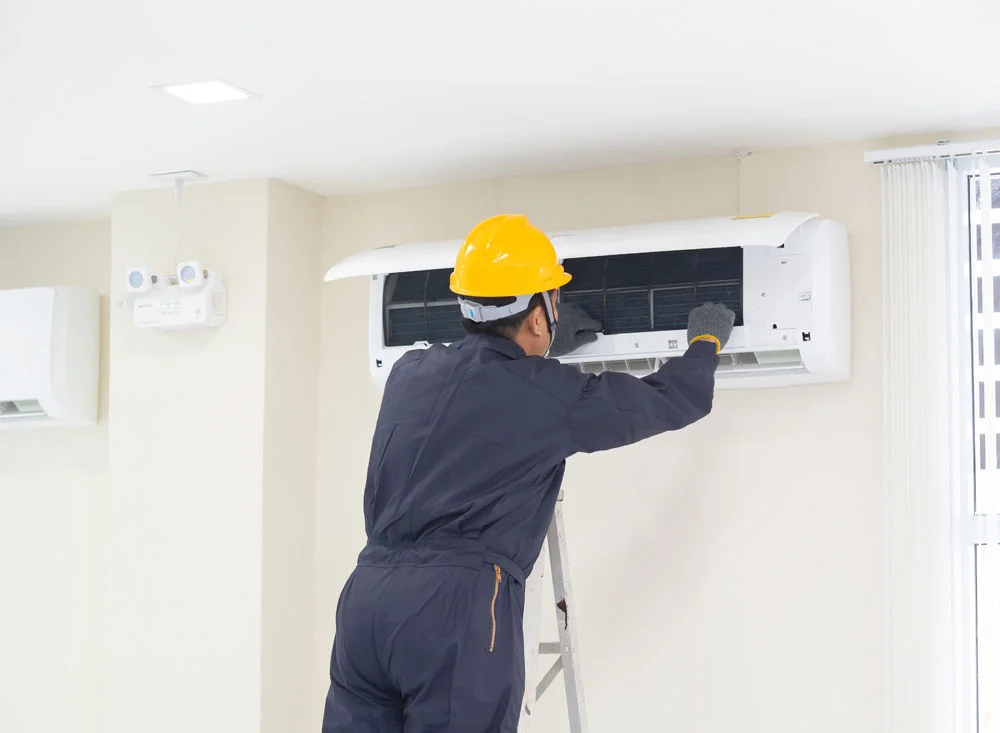
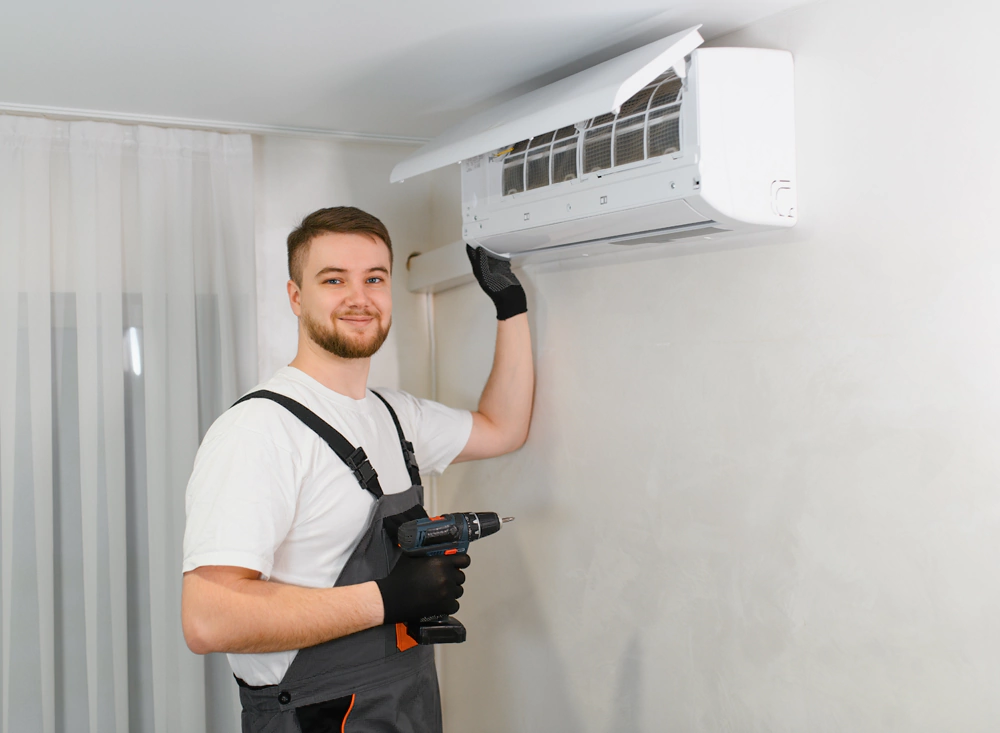
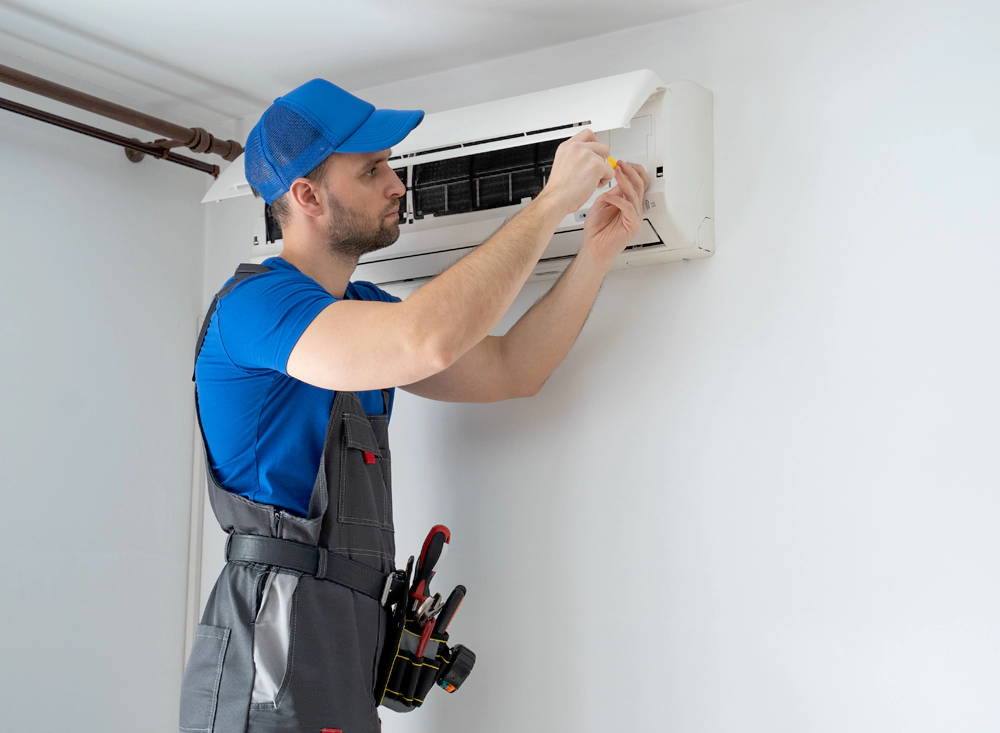
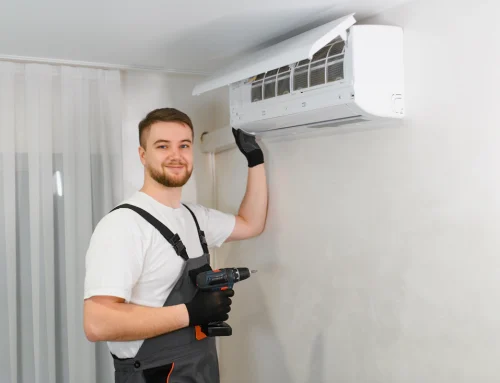
Air conditioning installation is not a suitable DIY job. NSW requires a licence or certificate for air conditioning and refrigeration work, including associated electrical wiring that would otherwise require an electrician.
A licensed professional can assess the property and recommend suitable equipment and placement. They can also make sure the installation follows the manufacturer’s requirements and relevant regulations.
Professional installation can also help you avoid problems later. Poor placement, incorrect sizing or faulty connections can affect performance and increase the risk of breakdowns.
Choose the right location
Where you install the system can affect its performance, appearance and future maintenance.
For a split system, the indoor unit should sit in a position where it can distribute air effectively throughout the room. Avoid placing it somewhere that creates an uncomfortable direct airflow for occupants.
The outdoor unit also needs enough space for proper airflow and servicing. Consider nearby windows, outdoor living areas and neighbouring properties when selecting its location.
If your rental property sits within a strata scheme, check the relevant requirements before starting work. External changes may require approval from the owners corporation or other relevant parties.
Consider your responsibilities as a landlord
Once you install an air conditioner as part of the rental property, you should make sure you understand your maintenance responsibilities.
NSW rental laws require landlords to maintain rental properties in a reasonable state of repair. Tenants must also report damage or disrepair as soon as possible and must not make changes to the property without written consent unless the tenancy agreement allows them.
Air conditioner breakdowns can also fall under urgent repairs in NSW. The NSW Government lists the failure or breakdown of a heater or air conditioner as an essential appliance repair.
For this reason, it makes sense to keep installation records, warranty information and maintenance details in an easy-to-access place.
Keep future maintenance in mind
An air conditioner may work efficiently when you first install it, but regular care helps maintain its performance.
When planning the installation, make sure technicians can easily access the indoor and outdoor components for future servicing. Keep the outdoor unit clear of obstructions and make sure tenants understand basic care, such as keeping filters clean where appropriate.
You should also respond promptly if tenants report unusual noises, poor cooling, water leaks or other problems. Addressing small issues early can help prevent more expensive repairs.
Think about future rental appeal
Air conditioning can be a practical addition to a Maitland rental property. Tenants often consider comfort, running costs and available features when comparing homes, so a suitable air conditioning system can make a property more appealing while helping provide a comfortable living environment.
A well-planned installation can improve the property’s everyday usability without requiring major changes to the home. It can also give you a useful feature to highlight when advertising the property.
Before making a decision, consider the property’s size, layout, insulation, likely usage and your budget. You should also check whether any current or proposed rental energy efficiency requirements could affect future upgrades. NSW consulted on Minimum Energy Efficiency Rental Standards in 2026, which may include requirements relating to heating and cooling if introduced.
Final thoughts
Installing air conditioning in a Maitland rental property is an investment that needs careful planning. The right system can improve tenant comfort, support efficient heating and cooling and add another practical feature to your property.
At Onsite Air, we help landlords choose air conditioning solutions that suit their property’s layout, cooling needs and budget. We can guide you through system selection and professional installation to help you create a comfortable and reliable rental property for your tenants.
Share on
Related Posts


Get a FREE Quote