Don’t Let These 4 Installation Mistakes Ruin Your AC Performance
An air conditioner is more than a seasonal convenience, it’s a substantial investment in the comfort and productivity of your home or workplace. But many property owners underestimate just how much the installation itself determines long-term performance. A high-efficiency system that is poorly installed can lose up to 30 % of its rated capacity, drive up electricity costs, and experience premature breakdowns. In Australia’s mix of hot summers, humid coastlines and dusty interiors, those losses show up quickly. Below we outline four installation mistakes we regularly encounter and explain how to avoid them.
Skipping a Precise Load Calculation
Choosing an air conditioner on the basis of floor area alone is a common shortcut, yet it rarely produces the right result.
The true cooling and heating load depends on many site-specific factors:
- Insulation Levels and Construction Materials: A well-insulated brick home in Melbourne behaves very differently from a lightweight weatherboard in Darwin.
- Ceiling Height and Room Volume: High ceilings increase the cubic metres that must be conditioned.
- Window Orientation and Glazing: Large west-facing windows can dramatically increase afternoon heat gain.
- Occupancy and Equipment: Kitchens, home offices and entertainment rooms generate extra internal heat.
An oversized unit will cycle on and off too frequently, never running long enough to dehumidify properly and placing stress on the compressor. An undersized system will run continuously yet still struggle to reach set temperatures, wearing out components and inflating electricity bills.
Professional installers perform a formal heat-load calculation, often called a Manual J assessment or an Australian equivalent to determine the exact capacity required. This process closely considers several factors like building structure, local climate data, and even prevailing winds to determine the right air conditioner for your premises, not too big, not too small. This additional time spent on a detailed calculation pays off in efficiency, comfort and system longevity.
Inadequate Duct Design and Sealing
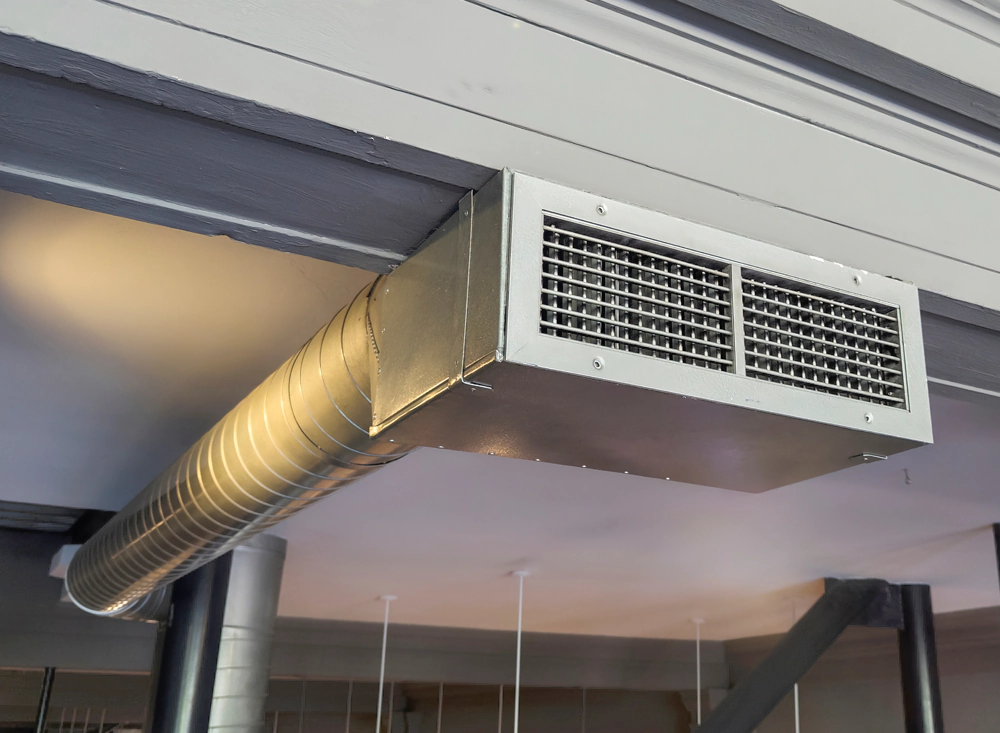
Even the most advanced air conditioner will underperform if the ductwork is poorly designed.
We frequently see the following issues:
- Leaky Connections: If there are gaps at joints the conditioned air can escape into your roof cavities. The result is a room that cools unevenly and wasted energy.
- Sharp Bends or Kinks: Flexible ducting that snakes around framing can create high static pressure and choke airflow.
- Undersized Returns: If the return air path is too small, the fan will have to work harder, significantly increasing energy use and noise.
All or any of these design flaws can quickly lead to constant maintenance requirements, repair work or rising electricity bills. Skip them all and ensure the efficiency of your air conditioning and avoid any unnecessary costs down the line.
Incorrect Refrigerant Charge
Many assume a factory-charged outdoor unit is ready to run as soon as the lines are connected. In reality, every installation has unique piping lengths, elevation changes and ambient conditions that affect the final refrigerant requirement. Too little refrigerant allows the evaporator coil to freeze; too much can flood the compressor with liquid refrigerant. Both conditions reduce cooling capacity and dramatically shorten equipment life.
A licensed technician follows a strict procedure:
- Evacuate the system with a deep vacuum to remove moisture and non-condensable gases.
- Weigh in the refrigerant according to manufacturer specifications, adjusting for actual line length and rise.
- Verify performance by measuring superheat and sub-cooling to confirm the charge is correct under live conditions.
Because refrigerants are regulated substances in Australia, this task must be carried out by an ARC-certified professional. Cutting corners here is a direct path to early compressor failure and voided warranties.
Insufficient Airflow and Outdoor Clearance
Airflow is the lifeblood of any air conditioning system. Restrictions, whether indoors or out, force the equipment to work harder and reduce its efficiency.
Typical problems include:
- Furniture or built-in cabinetry around the grilles can block them and restrict air circulation.
- Filters that are too small or neglected quickly become a choke point, increasing static pressure and straining the fan motor.
- Condensing units installed tight against fences, walls or dense vegetation cannot expel heat effectively.
As per industry experts, there must be at least 300 mm of clear space on all sides of the outdoor condenser. When it comes to above or vertical airflow, the more the better. Next comes the indoor unit. You can’t place it anywhere you like but ensure it remains unobstructed. Also, make sure the filters match the system’s airflow requirements.
Pair proper installation with regular maintenance like vacuuming or replacing filters and clearing debris around the condenser to keep the system operating at its rated efficiency.
The Case for Professional Installation
Some homeowners attempt a DIY installation or accept the lowest bid, assuming the process is no more than mounting hardware and connecting wires. Unfortunately, these four problem areas, namely, load calculation, duct design, refrigerant charging and airflow management require training, specialised tools and compliance with Australian standards. An incorrectly installed system not only costs more to run but can also void the manufacturer’s warranty and shorten the equipment’s life by years.
At Oniste Air, we approach installation as the foundation of system performance. Our technicians:
- Undertake detailed site inspections and begin by calculating heat load.
- Design and seal ductwork to AS 4254 standards for air-handling systems.
- Use professional equipment like calibrated scales and digital gauges to charge the refrigerant accurately.
The result is a flawless installation worth your money.
To Conclude,
Air conditioning is a long-term investment in comfort, health and energy efficiency. But the purchase price is only part of the equation. You can purchase even the most expensive model available in the market but without proper installation, it won’t deliver the desired results. So, if you are planning a new system or replacing an ageing one, partner with a qualified professional who understands Australian climate conditions and adheres to national standards. And for that look no further than our team at Onsite Air. You can count on our experts for comprehensive assistance, from selection to installation and maintenance.
Share on
Related Posts

Get a FREE Quote